The eBooks we sell are sold as a single-user licence and are intended for the end user only.
The sale of some eBooks are restricted to certain countries. To alert you to such restrictions, please select the country of the billing address of your credit or debit card you wish to use for payment.
For further information see https://www.wildy.com/ebook-formats
Once the order is confirmed an e-mail will be sent to you to allow you to download the eBook. For UK purchases this will be automatic. For purchases outside the UK a member of staff will need to confirm the sale. (Staff are available to do this during normal business hours, Mon-Fri 8:30-17:00 UK time)
All eBooks are supplied firm sale and cannot be returned. If you believe there is a fault with your eBook then contact us on ebooks@wildy.com and we will help in resolving the issue. This does not affect your statutory rights.
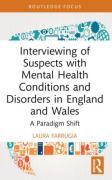
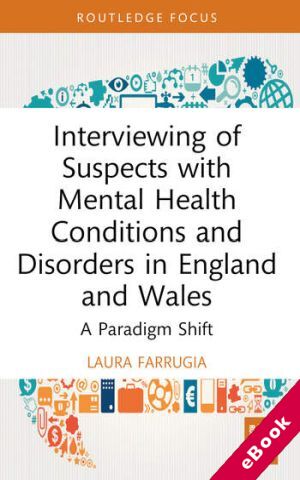
Interviewing of Suspects with Mental Health Conditions and Disorders in England and Wales explores cutting-edge research that focuses specifically on these adults (including their cognitive needs and psychological vulnerabilities), the impact on the investigative interview, and existing legislation, guidance and practice.
The book opens with a historical overview of the move from interrogation to investigative interviewing, including the impact of well-known miscarriages of justice and the inquiry that led to the development of current best practice interviewing. Further chapters focus on the concept of vulnerability within current theoretical frameworks, with a particular emphasis on mental health conditions and disorders, including how they are constructed, understood, and identified within legislation and by those working at the forefront of the criminal justice system. The book also examines current safeguards available to the suspect with mental health conditions and disorders, such as the Appropriate Adult; contemporary research explores their involvement with vulnerable suspects and whether it is sufficient, as well as how the Appropriate Adult understands and experiences their role. Final chapters scrutinise current best practice investigative interviewing of suspects with mental health conditions and disorders, and a paradigm shift towards an emerging evidence-based interview model that considers the vulnerabilities associated with suspects with mental health conditions and disorders in the investigative interview.
Examining current psychological theory, contemporary research and existing legislation and guidance including authorised professional practice, this book will be of interest to those working within the criminal justice system, as well as policing and forensic psychology students. In particular, it is essential reading for all serving and trainee police officers, those delivering investigative interviewing training, and interviewing personnel, such as Appropriate Adults.