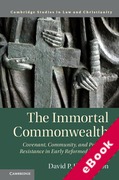
In the midst of intense religious conflict in the late sixteenth and early seventeenth century, theological and political concepts converged in remarkable ways.
Incited by the slaughter of French Protestants in the Saint Bartholomew's Day Massacre, Reformed theologians and lawyers began to marshal arguments for political resistance. These theological arguments were grounded in uniquely religious conceptions of the covenant, community, and popular sovereignty.
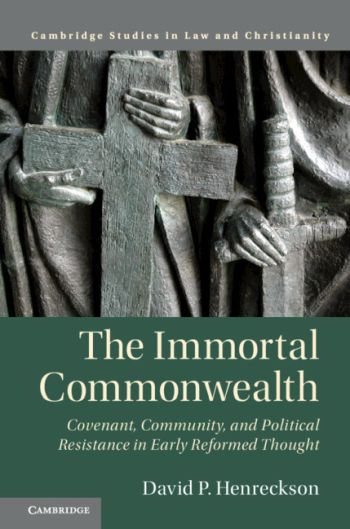
While other works of historical scholarship have focused on the political and legal sources of this strain of early modern resistance literature, The Immortal Commonwealth examines the frequently overlooked theological sources of these writings. It reveals how Reformed thinkers such as Heinrich Bullinger, John Calvin, Theodore Beza, and Johannes Althusius used traditional theological conceptions of covenant and community for surprisingly radical political ends.