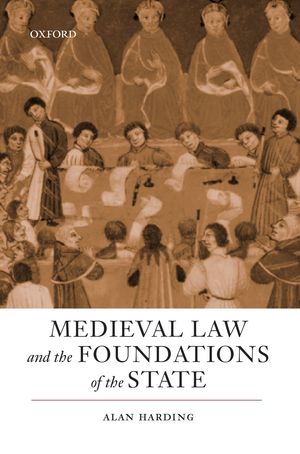
The state is the most powerful and contested of political ideas, loved for its promise of order but hated for its threat of coercion. In this broad-ranging new study, Alan Harding challenges the orthodoxy that there was no state in the Middle Ages, arguing instead that it was precisely then that the concept acquired its force.
He explores how the word 'state' was used by medieval rulers and their ministers and connects the growth of the idea of the state with the development of systems for the administration of justice and the enforcement of peace. He shows how these systems provided new models for government from the centre, successfully in France and England but less so in Germany.
The courts and legislation of French and English kings are described establishing public order, defining rights to property and liberty, and structuring commonwealths by 'estates'. In the final chapters the author reveals how the concept of the state was taken up by political commentators in the wars of the later Middle Ages and the Reformation Period, and how the law-based 'state of the king and the kingdom' was transformed into the politically dynamic 'modern state'.