The eBooks we sell are sold as a single-user licence and are intended for the end user only.
The sale of some eBooks are restricted to certain countries. To alert you to such restrictions, please select the country of the billing address of your credit or debit card you wish to use for payment.
For further information see https://www.wildy.com/ebook-formats
Once the order is confirmed an e-mail will be sent to you to allow you to download the eBook. For UK purchases this will be automatic. For purchases outside the UK a member of staff will need to confirm the sale. (Staff are available to do this during normal business hours, Mon-Fri 8:30-17:00 UK time)
All eBooks are supplied firm sale and cannot be returned. If you believe there is a fault with your eBook then contact us on ebooks@wildy.com and we will help in resolving the issue. This does not affect your statutory rights.
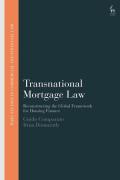
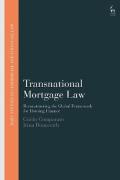
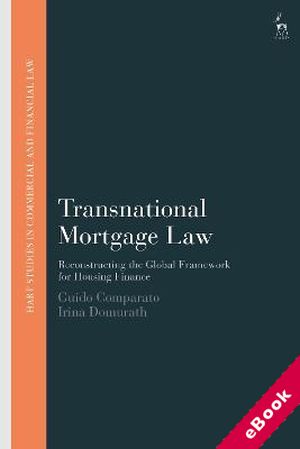
This book uncovers and reconstructs the growing body of legal principles and rules governing mortgages that have been developed by different transnational institutions and actors.
It shows how mortgages have evolved from a type of real security commonly used to facilitate lending by mitigating credit risk, to a transferable commodity with the potential to affect international financial stability and consumer welfare. In doing so, the book reveals the emergence of new policy objectives and rationales for regulation that have led to changes in the structure and functions of mortgage laws. Characterising this development as a type of transnational law, the book highlights the paradigm shifts in the law of residential mortgages brought about by their increasing global relevance. The analysis reveals tensions between the goals of risk mitigation, financial stability, consumer protection and housing justice.
The result is an innovative analysis at the intersection of contract law, property law and international financial regulation. The book portrays transnational mortgage law as a complex field governed by a plurality of socially and economically relevant but potentially conflicting goals and principles.