The eBooks we sell are sold as a single-user licence and are intended for the end user only.
The sale of some eBooks are restricted to certain countries. To alert you to such restrictions, please select the country of the billing address of your credit or debit card you wish to use for payment.
For further information see https://www.wildy.com/ebook-formats
Once the order is confirmed an e-mail will be sent to you to allow you to download the eBook. For UK purchases this will be automatic. For purchases outside the UK a member of staff will need to confirm the sale. (Staff are available to do this during normal business hours, Mon-Fri 8:30-17:00 UK time)
All eBooks are supplied firm sale and cannot be returned. If you believe there is a fault with your eBook then contact us on ebooks@wildy.com and we will help in resolving the issue. This does not affect your statutory rights.
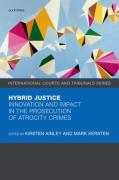
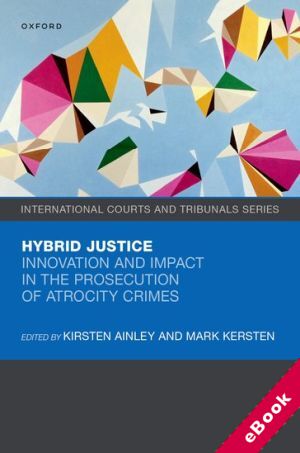
The last decade has seen the unexpected re-emergence of hybrid and internationalised courts - institutions which operate with varying combinations of national and international law, procedure, and staff. Whilst the establishment of the permanent International Criminal Court should have made hybrid mechanisms largely obsolete, hybrids have recently been established or proposed for atrocity crimes committed in Chad, South Sudan, Israel/Palestine, the Central African Republic, Kosovo, Syria, Sri Lanka, Myanmar, The Gambia, Liberia, and Ukraine.
Hybrid Justice critically examines the resurgent promise of hybrid courts. Focusing on the fields, practices, innovations, and of hybrid courts, the contributors evaluate hybrids' success, and in doing so, help to clarify the conditions and mechanisms that makes hybrids likely to succeed in their mandates and impacts. The authors focus on hybrid courts and resilience: the resilience of hybrid mechanisms to withstand political and other pressures to deliver justice and accountability, and the potential contribution of hybrids to the resilience of affected communities.
Borne out of a collaboration between lawyers, academics, and activists, this edited volume provides a uniquely comparative account of the development of hybrid courts in recent years.