The eBooks we sell are sold as a single-user licence and are intended for the end user only.
The sale of some eBooks are restricted to certain countries. To alert you to such restrictions, please select the country of the billing address of your credit or debit card you wish to use for payment.
For further information see https://www.wildy.com/ebook-formats
Once the order is confirmed an e-mail will be sent to you to allow you to download the eBook. For UK purchases this will be automatic. For purchases outside the UK a member of staff will need to confirm the sale. (Staff are available to do this during normal business hours, Mon-Fri 8:30-17:00 UK time)
All eBooks are supplied firm sale and cannot be returned. If you believe there is a fault with your eBook then contact us on ebooks@wildy.com and we will help in resolving the issue. This does not affect your statutory rights.
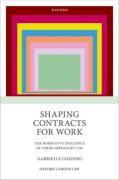
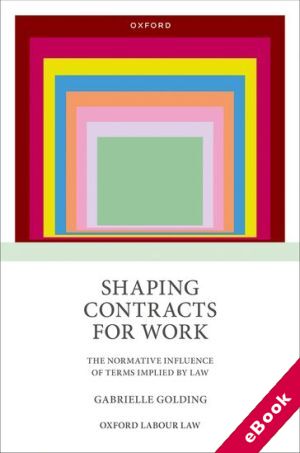
Shaping Contracts for Work provides an in-depth examination of the common law's role in shaping contracts for work, through the mechanism of implied terms. It constructs a theory which views the nature of the employment contract as distinct from other types of work contract. Terms implied by law into employment contracts, as well as their potential to operate in other non-standard contracts for the performance of work, are critically examined by reference to the test that courts adopt when they are asked to imply such terms.
In part one, Golding provides an overarching survey of the law which governs express and implied terms in contracts. In doing so, she considers the broader judicial role in implying terms and assesses how it can fundamentally alter the nature of the relationship between contracting parties. The second part draws comparisons between England and Australia, tracing the origins and status of select terms across both jurisdictions, and exploring how the application of these terms is often presumed. Golding also examines the duties of mutual trust, confidence, and good faith in both jurisdictions, investigating their potential application in employment contracts. In part three, Golding demonstrates why courts need to better articulate their understanding of what constitutes an 'employment contract' as a distinctive class of contract.
By focussing on the impact of terms, this work adds a unique dimension to the debate concerning the regulation of waged work in the context of ever-increasing non-standard modes of work.