The eBooks we sell are sold as a single-user licence and are intended for the end user only.
The sale of some eBooks are restricted to certain countries. To alert you to such restrictions, please select the country of the billing address of your credit or debit card you wish to use for payment.
For further information see https://www.wildy.com/ebook-formats
Once the order is confirmed an e-mail will be sent to you to allow you to download the eBook. For UK purchases this will be automatic. For purchases outside the UK a member of staff will need to confirm the sale. (Staff are available to do this during normal business hours, Mon-Fri 8:30-17:00 UK time)
All eBooks are supplied firm sale and cannot be returned. If you believe there is a fault with your eBook then contact us on ebooks@wildy.com and we will help in resolving the issue. This does not affect your statutory rights.
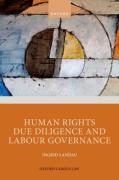
Human rights due diligence (HRDD) has emerged as a dominant frame through which to conceptualise and operationalise responsible business conduct with respect to workers' rights in global supply chains. Legislation mandating HRDD is now found in several European countries and across various national regulatory agendas. Many scholars, practitioners, and activists are actively calling for further legalisation, believing that this will broaden respect for human rights.
Yet to date, there has been little sustained scholarly analysis from a labour rights perspective. Observing that HRDD, as originally articulated in the UN Guiding Principles on Business and Human Rights, is open to multiple interpretations, this book examines global debates on the role and status of the concept. It also considers the implications of HRDD's ascension for transnational labour law as a distinct field of law, scholarship, and activism.
Combining insights from transnational governance and business regulation with empirical analysis, this book argues that HRDD is not being institutionalised at either the global or national level in a way that renders it a transformative or even robust mechanism of transnational labour law. It also draws attention to the important, but largely overlooked, ways in which the rise of HRDD is leading to subtle shifts in the configuration of actors and institutions in labour governance.