The eBooks we sell are sold as a single-user licence and are intended for the end user only.
The sale of some eBooks are restricted to certain countries. To alert you to such restrictions, please select the country of the billing address of your credit or debit card you wish to use for payment.
For further information see https://www.wildy.com/ebook-formats
Once the order is confirmed an e-mail will be sent to you to allow you to download the eBook. For UK purchases this will be automatic. For purchases outside the UK a member of staff will need to confirm the sale. (Staff are available to do this during normal business hours, Mon-Fri 8:30-17:00 UK time)
All eBooks are supplied firm sale and cannot be returned. If you believe there is a fault with your eBook then contact us on ebooks@wildy.com and we will help in resolving the issue. This does not affect your statutory rights.
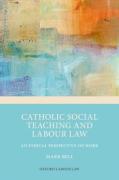
Catholic Social Teaching and Labour Law explores the contribution that religious ethics makes to debates on justice in working life. Many faiths include beliefs about the significance of work to human development and the need for work to be performed under conditions that uphold dignity, equality, and solidarity . This book considers how the substantive provisions of labour law reflect prior ethical choices about how workers should be treated, and how beliefs from Catholicism influence these.
This book provides a thorough account of the principles found in Catholic Social Teaching (CST), and how these impact human work and labour rights . It tests the contemporary relevance of its principles by applying them to current debates, using EU labour law as a case study. Specifically, it examines CST on the right to a just wage, the right to rest, worker participation, and equality and discrimination. The book finds that CST offers fresh insights on long-standing injustices in the labour market, such as low wages or poor working conditions, and also sheds light on emerging challenges such as ensuring rest in an era of digital connectivity. The book recognizes that tensions arise in areas where the Church's beliefs diverge from those that prevail in a secular understanding of human rights. This is particularly evident in debates relating to equality. It concludes that faith-based perspectives should be included in pluralistic dialogue on the future of labour law.