The eBooks we sell are sold as a single-user licence and are intended for the end user only.
The sale of some eBooks are restricted to certain countries. To alert you to such restrictions, please select the country of the billing address of your credit or debit card you wish to use for payment.
For further information see https://www.wildy.com/ebook-formats
Once the order is confirmed an e-mail will be sent to you to allow you to download the eBook. For UK purchases this will be automatic. For purchases outside the UK a member of staff will need to confirm the sale. (Staff are available to do this during normal business hours, Mon-Fri 8:30-17:00 UK time)
All eBooks are supplied firm sale and cannot be returned. If you believe there is a fault with your eBook then contact us on ebooks@wildy.com and we will help in resolving the issue. This does not affect your statutory rights.
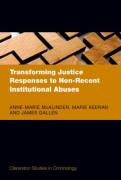
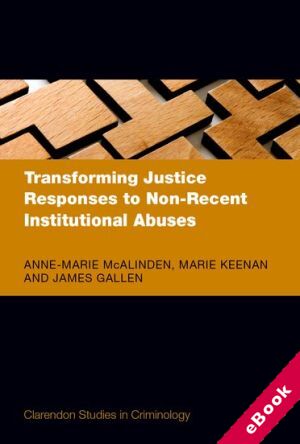
Over the last few decades, the issue of historical/ non-recent institutional abuses has resonated in a range of Western states and churches. Despite the recent proliferation of 'justice' responses to such abuses including prosecutions and civil litigation, inquiries, redress and apologies, it is a subject which is insufficiently understood in the literature.
Set against the complexities of the legal, historical, cultural, and political realities of addressing non-recent institutional abuses, Transforming Justice Responses to Non-Recent Institutional Abuses critically examines these justice responses across Northern Ireland and the Republic of Ireland. Bringing together the voices of victim/survivors of non-recent institutional abuses with legal actors, academics, media professionals, and church and state actors on their experiences of justice processes, this book reframes discourses on accountability and responsibility and considers how to improve justice processes at the level of praxis and increase engagement between victim/survivors and institutional actors.
Drawing on interdisciplinary literature related to restorative, transitional, and transformative justice and analysis of primary research, the book advances analysis of the role of innovative justice in this space and a new approach to justice which bridges the accountability gap between seeking and achieving justice for non-recent institutional abuses while improving outcomes for victims and survivors.