The eBooks we sell are sold as a single-user licence and are intended for the end user only.
The sale of some eBooks are restricted to certain countries. To alert you to such restrictions, please select the country of the billing address of your credit or debit card you wish to use for payment.
For further information see https://www.wildy.com/ebook-formats
Once the order is confirmed an e-mail will be sent to you to allow you to download the eBook. For UK purchases this will be automatic. For purchases outside the UK a member of staff will need to confirm the sale. (Staff are available to do this during normal business hours, Mon-Fri 8:30-17:00 UK time)
All eBooks are supplied firm sale and cannot be returned. If you believe there is a fault with your eBook then contact us on ebooks@wildy.com and we will help in resolving the issue. This does not affect your statutory rights.
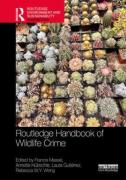
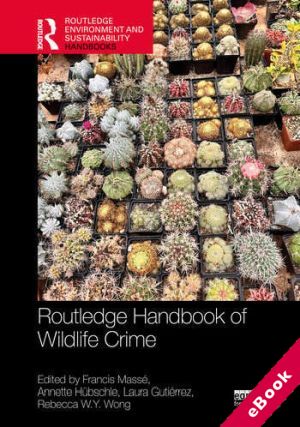
The Routledge Handbook of Wildlife Crime provides a comprehensive and state of the art overview of wildlife crime in its various forms.
The effects of wildlife crime and over-exploitation are contributing to the possible extinction of one million species. These activities also harm human and non-human animals, ecosystems and communities. To understand and tackle these issues, this handbook presents critical approaches to the study of wildlife crime grounded in empirical, methodological, and conceptual perspectives. Curated for an international audience of researchers, practitioners and policy-makers its contributors are drawn from diverse disciplines, backgrounds, and geographies. The handbook addresses recognised challenges associated with wildlife crime, including transnational security, the role of corporations, legislative frameworks and enforcement strategies, as well as broader concerns related to conservation, sustainable development, socio-environmental harm, and well-being. Importantly, it also delves into emerging areas, such as gender dynamics, digital markets and social media, social inequality and the marginalisation of vulnerable groups, and moral philosophy and ethics. This handbook equips readers to understand and respond to the multifaceted challenges of wildlife crime in the 21st century.
The Handbook of Wildlife Crime will be of great interest to students and scholars of wildlife crime, wildlife management and conservation, environmental crime, and green criminology more widely. The book will also be of use to practitioners and policymakers involved in developing and implementing strategies to reduce wildlife crime.