The eBooks we sell are sold as a single-user licence and are intended for the end user only.
The sale of some eBooks are restricted to certain countries. To alert you to such restrictions, please select the country of the billing address of your credit or debit card you wish to use for payment.
For further information see https://www.wildy.com/ebook-formats
Once the order is confirmed an e-mail will be sent to you to allow you to download the eBook. For UK purchases this will be automatic. For purchases outside the UK a member of staff will need to confirm the sale. (Staff are available to do this during normal business hours, Mon-Fri 8:30-17:00 UK time)
All eBooks are supplied firm sale and cannot be returned. If you believe there is a fault with your eBook then contact us on ebooks@wildy.com and we will help in resolving the issue. This does not affect your statutory rights.
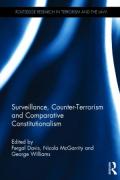
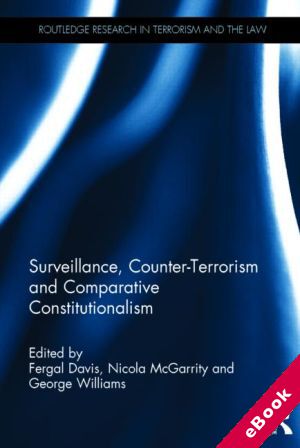
The decade after the September 11, 2001 terrorist attacks saw the enactment of anti-terrorism laws around the world that challenged understandings and assumptions about public institutions, human rights and constitutional law. Many of those laws remain on the statute books and continue to have a profound impact on constitutionalism and the rule of law. One of the most striking and rapid areas of development has been the conferral of increased powers of surveillance on law enforcement and intelligence agencies. The chapters in this edited book examine the impact of these powers on constitutionalism at both the domestic and international levels.
The book discusses the prevalence of mechanisms of mass surveillance; the challenges that technological developments pose for constitutionalism; new actors in the surveillance state; the use of surveillance material as evidence in court and the difficulties of balancing secrecy and fair trial requirements; and the effectiveness of constitutional and other forms of review of surveillance powers. The contributors to the book who are leading international experts in anti-terrorism and constitutional law take a comparative approach looking at jurisdictions including the United States, Canada, United Kingdom, Europe, Israel, India, Japan, China and Australia. The book draws important conclusions about the constitutional implications, short- and long-term, domestic and international, of the expansion of surveillance powers after 9/11.