The eBooks we sell are sold as a single-user licence and are intended for the end user only.
The sale of some eBooks are restricted to certain countries. To alert you to such restrictions, please select the country of the billing address of your credit or debit card you wish to use for payment.
For further information see https://www.wildy.com/ebook-formats
Once the order is confirmed an e-mail will be sent to you to allow you to download the eBook. For UK purchases this will be automatic. For purchases outside the UK a member of staff will need to confirm the sale. (Staff are available to do this during normal business hours, Mon-Fri 8:30-17:00 UK time)
All eBooks are supplied firm sale and cannot be returned. If you believe there is a fault with your eBook then contact us on ebooks@wildy.com and we will help in resolving the issue. This does not affect your statutory rights.
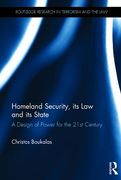
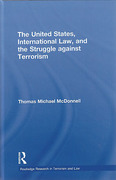
The book provides a comprehensive assessment of US domestic counterterrorism policy since 2001. It sets out the importance of developments of counterterrorism policy and their effects on political organisation beyond the realm of security. Drawing on state theory of Nicos Poulantzas and Bob Jessop which views the state as a social relation the book advances a novel way of conceptualising the interrelations among law, the state, and society. Here law is seen as a social relation, and its content as a codification of social dynamics as they are mediated by both state and legal institutions. Therefore law can at any given time provide important indications regarding the nature of the state, its relation to the population, and the strategic interventions it attempts in the field of social dynamics.
The book investigates the institutional restructuring involved in the advent of homeland security. It considers the introduction of the Department of Homeland Security (DHS) and its relations with state and local governments, as well as assessing the relations between the Department and private business in the 'homeland security' context. The book then goes on to examine various parts of the counterterrorism legislation focusing on those elements which have been used outside of the sphere of counter-terrorism to exercise repression of wider political and economic actions. The book concludes that homeland security policy in the US has become a new terrain of social antagonism, involving significant reconfigurations of the law-form and the state-form which is entering a new phase of Authoritarian Statism. The book charts how the mechanisms introduced in the framework of security policy are seemingly providing the default mode for economic policy, with an emphasis on full authorisation and extreme concentration of power at the upper echelons of the executive, resurgence of protectionism within national borders and the decline of international regimes of governance.