The eBooks we sell are sold as a single-user licence and are intended for the end user only.
The sale of some eBooks are restricted to certain countries. To alert you to such restrictions, please select the country of the billing address of your credit or debit card you wish to use for payment.
For further information see https://www.wildy.com/ebook-formats
Once the order is confirmed an e-mail will be sent to you to allow you to download the eBook. For UK purchases this will be automatic. For purchases outside the UK a member of staff will need to confirm the sale. (Staff are available to do this during normal business hours, Mon-Fri 8:30-17:00 UK time)
All eBooks are supplied firm sale and cannot be returned. If you believe there is a fault with your eBook then contact us on ebooks@wildy.com and we will help in resolving the issue. This does not affect your statutory rights.
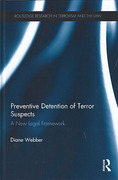
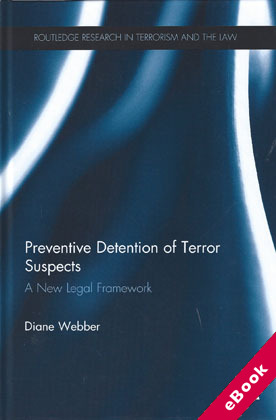
Preventive detention as a counter-terrorism tool is fraught with conceptual and procedural problems and risks of misuse, excess and abuse. Many have debated the inadequacies of the current legal frameworks for detention, and the need for finding the most appropriate legal model to govern detention of terror suspects that might serve as a global paradigm.
This book offers a comprehensive and critical analysis of the detention of terror suspects under domestic criminal law, the law of armed conflict and international human rights law. The book looks comparatively at the law in a number of key jurisdictions including the USA, the UK, Israel, France, India, Australia and Canada before comparing this to preventive detention under the law of armed conflict and various human treaties.
The book demonstrates that the procedures governing the use of preventive detention are deficient in each framework and that these deficiencies often have an adverse and serious impact on the human rights of detainees, thereby delegitimizing the use of preventive detention.
Based on her investigation Diane Webber puts forward a new approach to preventive detention, setting out ten key minimum criteria drawn from international human rights principles and best practices from domestic laws. The minimum criteria are designed to cure the current flaws and deficiencies and provide a base line of guidance for the many countries that choose to use preventive detention, in a way that both respects human rights and maintains security.