The eBooks we sell are sold as a single-user licence and are intended for the end user only.
The sale of some eBooks are restricted to certain countries. To alert you to such restrictions, please select the country of the billing address of your credit or debit card you wish to use for payment.
For further information see https://www.wildy.com/ebook-formats
Once the order is confirmed an e-mail will be sent to you to allow you to download the eBook. For UK purchases this will be automatic. For purchases outside the UK a member of staff will need to confirm the sale. (Staff are available to do this during normal business hours, Mon-Fri 8:30-17:00 UK time)
All eBooks are supplied firm sale and cannot be returned. If you believe there is a fault with your eBook then contact us on ebooks@wildy.com and we will help in resolving the issue. This does not affect your statutory rights.
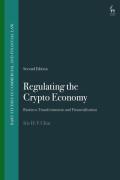
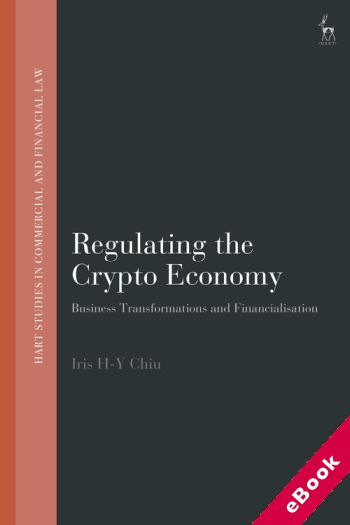
This book focuses on the building of a crypto economy as an alternative economic space and discusses how the crypto economy should be governed. The crypto economy is examined in its productive and financialised aspects, in order to distil the need for governance in this economic space.
The author argues that it is imperative for regulatory policy to develop the economic governance of the blockchain-based business model, in order to facilitate economic mobilisation and wealth creation. The regulatory framework should cater for a new and unique enterprise organisational law and the fund-raising and financing of blockchain-based development projects. Such a regulatory framework is crucially enabling in nature and consistent with the tenets of regulatory capitalism.
Further, the book acknowledges the rising importance of private monetary orders in the crypto economy and native payment systems that do not rely on conventional institutions for value transfer. A regulatory blueprint is proposed for governing such monetary orders as 'commons' governance. The rise of Decentralised Finance and other financial innovations in the crypto economy are also discussed, and the book suggests a framework for regulatory consideration in this dynamic landscape in order to meet a balance of public interest objectives and private interests.
By setting out a reform agenda in relation to economic and financial governance in the crypto economy, this forward-looking work argues for the extension of 'regulatory capitalism' to this perceived 'wild west' of an alternative economic space. It advances the message that an innovative regulatory agenda is needed to account for the economically disruptive and technologically transformative developments brought about by the crypto economy.