The eBooks we sell are sold as a single-user licence and are intended for the end user only.
The sale of some eBooks are restricted to certain countries. To alert you to such restrictions, please select the country of the billing address of your credit or debit card you wish to use for payment.
For further information see https://www.wildy.com/ebook-formats
Once the order is confirmed an e-mail will be sent to you to allow you to download the eBook. For UK purchases this will be automatic. For purchases outside the UK a member of staff will need to confirm the sale. (Staff are available to do this during normal business hours, Mon-Fri 8:30-17:00 UK time)
All eBooks are supplied firm sale and cannot be returned. If you believe there is a fault with your eBook then contact us on ebooks@wildy.com and we will help in resolving the issue. This does not affect your statutory rights.
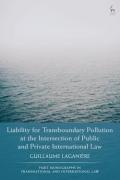
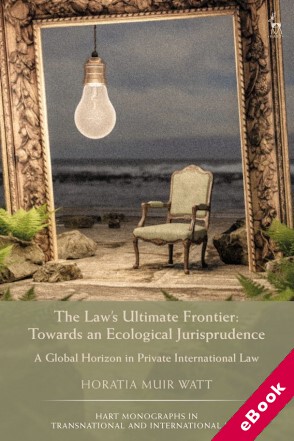
This important book offers an ambitious and interdisciplinary vision of how private international law (or the conflict of laws) might serve as a heuristic for re-working our general understandings of legality in directions that respond to ever-deepening global ecological crises. Unusual in legal scholarship, the author borrows (in bricolage mode) from the work of Bruno Latour, alongside indigenous cosmologies, extinction theories and Levinassian phenomenology, to demonstrate why this field's specific frontier location at the outpost of the law – where it is viewed from the outside as obscure and from the inside as a self-contained normative world – generates its potential power to transform law generally and globally.
Combining pragmatic and pluralist theory with an excavation of 'shadow' ecological dimensions of law, the author, a recognised authority within the field as conventionally understood, offers a truly global view. Put simply, it is a generational magnum opus. All international and transnational lawyers, be they in the private or public field, should read this book.
Horatia Muir Watt is Professor at Sciences Po Law School, Paris, France.