The eBooks we sell are sold as a single-user licence and are intended for the end user only.
The sale of some eBooks are restricted to certain countries. To alert you to such restrictions, please select the country of the billing address of your credit or debit card you wish to use for payment.
For further information see https://www.wildy.com/ebook-formats
Once the order is confirmed an e-mail will be sent to you to allow you to download the eBook. For UK purchases this will be automatic. For purchases outside the UK a member of staff will need to confirm the sale. (Staff are available to do this during normal business hours, Mon-Fri 8:30-17:00 UK time)
All eBooks are supplied firm sale and cannot be returned. If you believe there is a fault with your eBook then contact us on ebooks@wildy.com and we will help in resolving the issue. This does not affect your statutory rights.
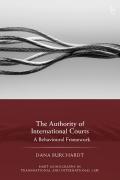
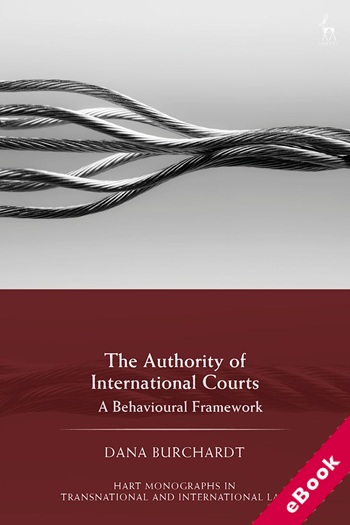
Why do some international courts wield broad authority while others face pushback or fade into irrelevance? This book provides novel theoretical and empirical insights into this question. It offers a fresh, interdisciplinary perspective on the authority of international courts, drawing from law, political science, and behavioural research.
It develops, in Part I, a theoretical model and analytical framework for assessing these questions. The model explains how authority relationships between courts and their audiences – such as states, NGOs, individual applicants, and domestic courts – are formed, maintained, or contested. In Part II, the book applies this analytical framework to in-depth case studies of two selected international courts: the European Court of Human Rights and the Court of Justice of the Economic Community of West African States. These studies not only provide deeper insights into the authority of these courts but also demonstrate how the analytical framework can be applied to other international courts to generate an enhanced understanding of international court authority.
The book sheds new light on why some courts enjoy enduring authority and others face pushback, offering powerful tools for understanding the behaviour of international courts and their audiences.