The device(s) you use to access the eBook content must be authorized with an Adobe ID before you download the product otherwise it will fail to register correctly.
For further information see https://www.wildy.com/ebook-formats
Once the order is confirmed an automated e-mail will be sent to you to allow you to download the eBook.
All eBooks are supplied firm sale and cannot be returned. If you believe there is a fault with your eBook then contact us on ebooks@wildy.com and we will help in resolving the issue. This does not affect your statutory rights.
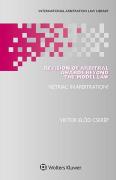
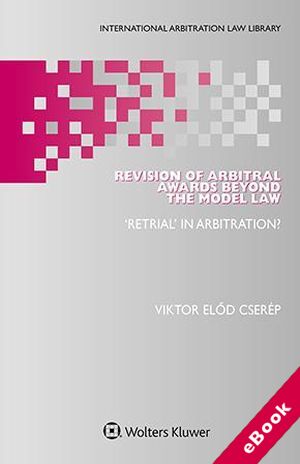
In terms of recourse against arbitral awards, the application for setting aside pursuant to Article 34 of the UNCITRAL Model Law on International Commercial Arbitration immediately comes to mind: the sole recourse before a court of the seat, available within a short time limit, on a select few grounds. This is indeed the baseline. Yet, several jurisdictions allow recourse against arbitral awards within longer time limits and on additional grounds. Some arbitration laws even provide for further means of recourse. Such possibilities are available in exceptional circumstances only. These typically include the discovery of facts, evidence or instances of fraud that may have influenced the outcome of the arbitration.
The author sets out to ascertain whether and how the ‘retrial’ of arbitration proceedings can be possible in such cas
es.What’s in this book:
The work contains:
How this will help you:
The book aims to explore possibilities of challenging arbitral awards in jurisdictions that go beyond the text of Article 34 of the Model Law. Such ‘next level’ recourse against arbitral awards is examined on the basis of real cases as well as at the level of theory and policy, and thus may be of interest to practitioners, academics and policymakers alike.