The eBooks we sell are sold as a single-user licence and are intended for the end user only.
The sale of some eBooks are restricted to certain countries. To alert you to such restrictions, please select the country of the billing address of your credit or debit card you wish to use for payment.
For further information see https://www.wildy.com/ebook-formats
Once the order is confirmed an e-mail will be sent to you to allow you to download the eBook. For UK purchases this will be automatic. For purchases outside the UK a member of staff will need to confirm the sale. (Staff are available to do this during normal business hours, Mon-Fri 8:30-17:00 UK time)
All eBooks are supplied firm sale and cannot be returned. If you believe there is a fault with your eBook then contact us on ebooks@wildy.com and we will help in resolving the issue. This does not affect your statutory rights.
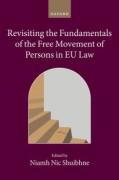
How 'free' is the free movement of persons? Why does the law that enables it need to be 'revisited'? This collection of essays, curated by Claire Kilpatrick and Joanne Scott for the European University Institute's 2020 Academy of European Law, addresses these questions. Across different examples - migration, posted workers, social security, Brexit, and Union citizenship - each chapter revisits the categories that have become entrenched in EU law on the free movement of persons and the boundaries that have been constructed as a result. Do they still represent meaningful differences? Are they valuable compass points or inhibitors of progress? Do they ensure comprehensive or fragmented protection of the person? In reconsidering the fundamentals of EU free movement law, the book draws attention to tensions that have not yet been properly resolved: between appropriate difference and problematic discrimination, or between the mythology and the experienced reality of free movement for the people who actually move. Its chapters consider how the free movement of persons connects to and is shaped by the EU legal spaces beyond free movement as well as by the space beyond law. The contributors do not shy away from provoking a rethink of core principles. They interrogate these fundamentals and the changing objectives of the free movement of persons to take up the challenge of doing it better: of making it both more protective of people and more resilient in ethical, systemic, and sociological terms.