The eBooks we sell are sold as a single-user licence and are intended for the end user only.
The sale of some eBooks are restricted to certain countries. To alert you to such restrictions, please select the country of the billing address of your credit or debit card you wish to use for payment.
For further information see https://www.wildy.com/ebook-formats
Once the order is confirmed an e-mail will be sent to you to allow you to download the eBook. For UK purchases this will be automatic. For purchases outside the UK a member of staff will need to confirm the sale. (Staff are available to do this during normal business hours, Mon-Fri 8:30-17:00 UK time)
All eBooks are supplied firm sale and cannot be returned. If you believe there is a fault with your eBook then contact us on ebooks@wildy.com and we will help in resolving the issue. This does not affect your statutory rights.
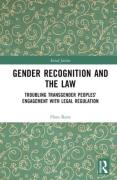
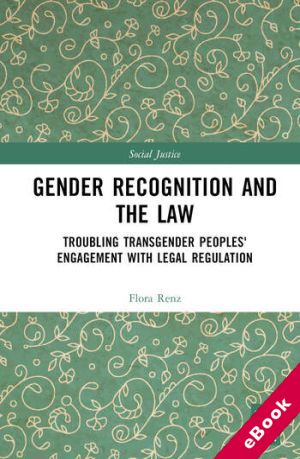
Analysing the strategies people use to resist, accept and respond to laws that attempt to shape not just their behaviour, but also their identity, this book pursues a critical engagement with legal gender transition.
The Gender Recognition Act (GRA) has often been described as a groundbreaking and progressive legal framework for allowing people to legally change their gender. This book seeks to challenge this representation by drawing on in-depth qualitative interviews with trans people about the GRA. Theoretically this book uses the concepts of legal consciousness, agency and emotion to highlight the normative underpinnings of the GRA. Overall, the book contends, the GRA does not accurately reflect many trans people's own understanding of their gender identity or their sexuality. It is designed to create subjects that govern their behaviour and self-expression in a way that aligns with a purely binary model of sex/gender and sexuality. Although a deviation from these norms does not incur any direct punishment, it indirectly leads to a denial of rights and legal protections. By reviewing relevant legislation and case law, and through qualitative research, the book establishes how, instead of uncritically accepting or completely rejecting the GRA, trans people enact their singular identities by engaging strategically with law.
This book will be of interest across a range of disciplines, including socio-legal studies, family law, gender, sexuality and law as well as sociology courses on gender, identity and social policy.