The eBooks we sell are sold as a single-user licence and are intended for the end user only.
The sale of some eBooks are restricted to certain countries. To alert you to such restrictions, please select the country of the billing address of your credit or debit card you wish to use for payment.
For further information see https://www.wildy.com/ebook-formats
Once the order is confirmed an e-mail will be sent to you to allow you to download the eBook. For UK purchases this will be automatic. For purchases outside the UK a member of staff will need to confirm the sale. (Staff are available to do this during normal business hours, Mon-Fri 8:30-17:00 UK time)
All eBooks are supplied firm sale and cannot be returned. If you believe there is a fault with your eBook then contact us on ebooks@wildy.com and we will help in resolving the issue. This does not affect your statutory rights.
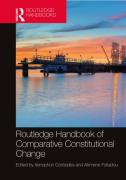
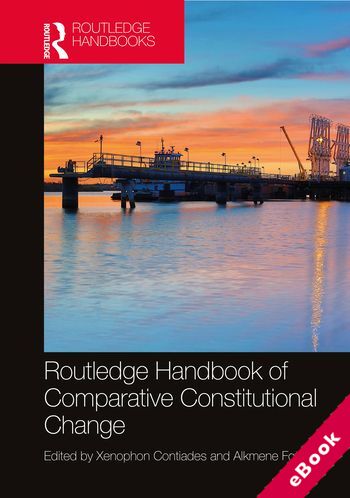
Comparative constitutional change has recently emerged as a distinct field in the study of constitutional law. It is the study of the way constitutions change through formal and informal mechanisms, including amendment, replacement, total and partial revision, adaptation, interpretation, disuse, and revolution. The shift of focus from constitution-making to constitutional change makes sense, since amendment power is the means used to refurbish constitutions in established democracies, enhance their adaptation capacity and boost their efficacy. Adversely, constitutional change is also the basic apparatus used to orchestrate constitutional backslide as the erosion of liberal democracies and democratic regression is increasingly affected through legal channels of constitutional change.
The Routledge Handbook of Comparative Constitutional Change provides a comprehensive reference tool for all those working in the field and a thorough landscape of all theoretical and practical aspects of the topic. Coherence from this aspect does not suggest a common view, as the chapters address different topics, but reinforces the establishment of Comparative Constitutional Change as a distinct field. The book brings together the most respected scholars working in the field, and presents a genuine contribution to comparative constitutional studies, comparative public law, political science and constitutional history.