The eBooks we sell are sold as a single-user licence and are intended for the end user only.
The sale of some eBooks are restricted to certain countries. To alert you to such restrictions, please select the country of the billing address of your credit or debit card you wish to use for payment.
For further information see https://www.wildy.com/ebook-formats
Once the order is confirmed an e-mail will be sent to you to allow you to download the eBook. For UK purchases this will be automatic. For purchases outside the UK a member of staff will need to confirm the sale. (Staff are available to do this during normal business hours, Mon-Fri 8:30-17:00 UK time)
All eBooks are supplied firm sale and cannot be returned. If you believe there is a fault with your eBook then contact us on ebooks@wildy.com and we will help in resolving the issue. This does not affect your statutory rights.
Due to a technical issue some ebooks are not available to order.
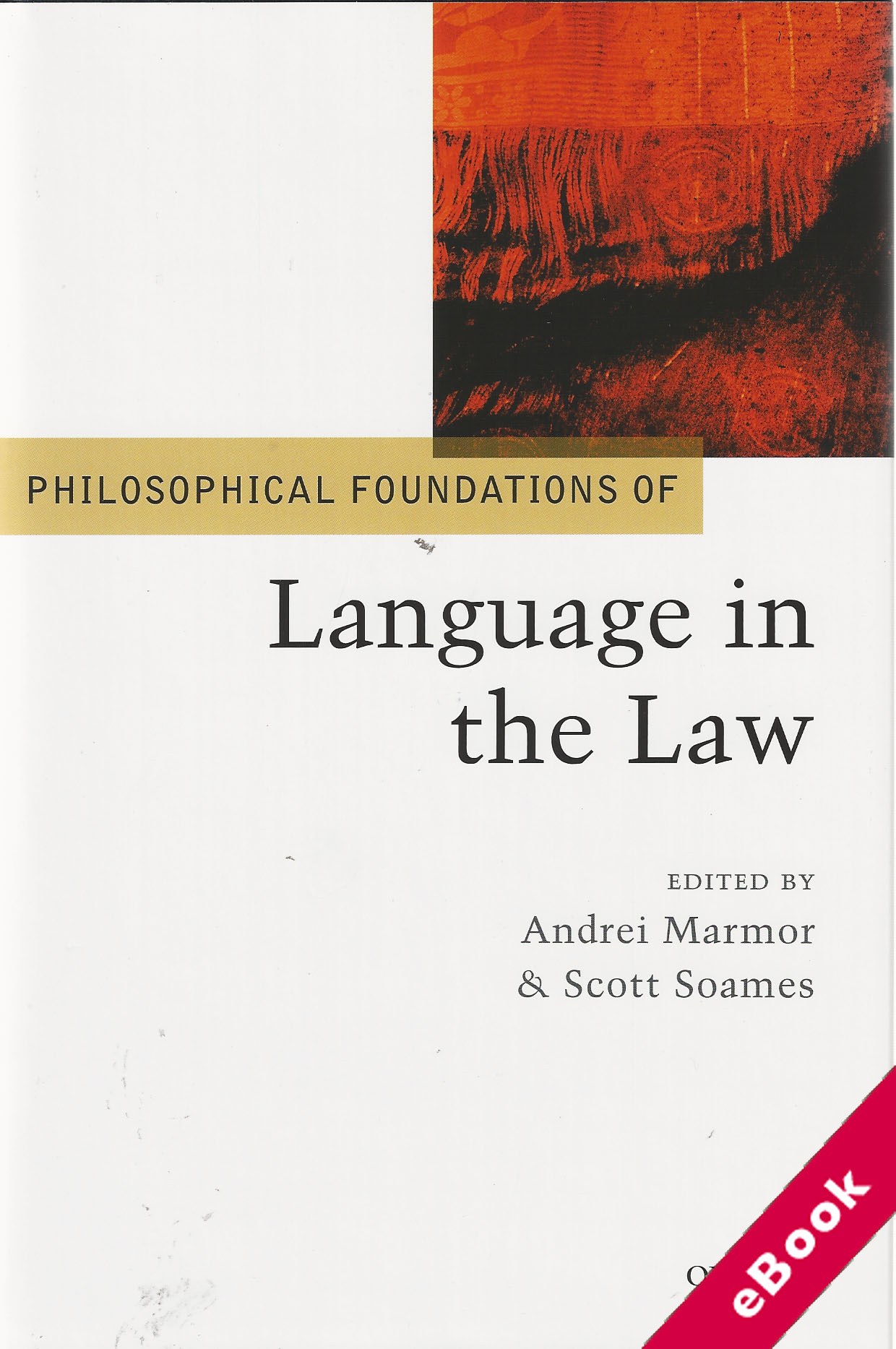
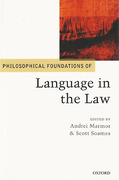
This collection brings together the best contemporary philosophical work in the area of intersection between philosophy of language and the law.
Some of the contributors are philosophers of language who are interested in applying advances in philosophy of language to legal issues, and some of the participants are philosophers of law who are interested in applying insights and theories from philosophy of language to their work on the nature of law and legal interpretation.
By making this body of recent work available in a single volume, readers will gain both a general overview of the various interactions between language and law, and also detailed analyses of particular areas in which this interaction is manifest.
The contributions to this volume are grouped under three main general areas: The first area concerns a critical assessment, in light of recent advances in philosophy of language, of the foundational role of language in understanding the nature of law itself.
The second main area concerns a number of ways in which an understanding of language can resolve some of the issues prevalent in legal interpretation, such as the various ways in which semantic content can differ from law's assertive content; the contribution of presuppositions and pragmatic implicatures in understanding what the law conveys; the role of vagueness in legal language, for example.
The third general topic concerns the role of language in the context of particular legal doctrines and legal solutions to practical problems, such as the legal definitions of inchoate crimes, the legal definition of torture, or the contractual doctrines concerning default rules.
Together, these three key issues cover a wide range of philosophical interests in law that can be elucidated by a better understanding of language and linguistic communication.

Due to a technical issue some ebooks are not available to order.

Due to a technical issue some ebooks are not available to order.
Due to a technical issue some ebooks are not available to order.







Due to a technical issue some ebooks are not available to order.
Due to a technical issue some ebooks are not available to order.

Due to a technical issue some ebooks are not available to order.

Due to a technical issue some ebooks are not available to order.
Due to a technical issue some ebooks are not available to order.


Due to a technical issue some ebooks are not available to order.
Due to a technical issue some ebooks are not available to order.
Due to a technical issue some ebooks are not available to order.

Due to a technical issue some ebooks are not available to order.