The eBooks we sell are sold as a single-user licence and are intended for the end user only.
The sale of some eBooks are restricted to certain countries. To alert you to such restrictions, please select the country of the billing address of your credit or debit card you wish to use for payment.
For further information see https://www.wildy.com/ebook-formats
Once the order is confirmed an e-mail will be sent to you to allow you to download the eBook. For UK purchases this will be automatic. For purchases outside the UK a member of staff will need to confirm the sale. (Staff are available to do this during normal business hours, Mon-Fri 8:30-17:00 UK time)
All eBooks are supplied firm sale and cannot be returned. If you believe there is a fault with your eBook then contact us on ebooks@wildy.com and we will help in resolving the issue. This does not affect your statutory rights.
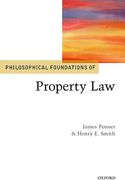
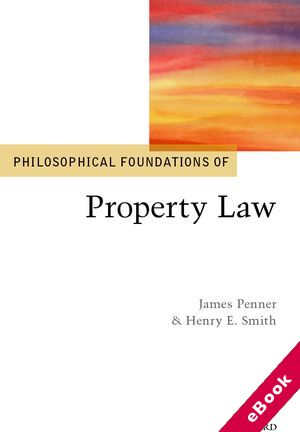
Property has long played a central role in political and moral philosophy. Philosophers dealing with property have tended to follow the consensus that property has no special content but is a protean construct - a mere placeholder for theories aimed at questions of distributive justice and efficiency.
Until recently there has been a relative absence of serious philosophical attention paid to the various doctrines that shape the actual law of property. If the philosophy of property is to be more attentive to concepts lying between broad considerations of political philosophy and distributive justice on the one hand and individual rules on the other, what in this broad space needs explaining, and how might we justify what we find?
The papers in this volume are a first step towards filling this gap in the philosophical analysis of private law. This is achieved here by revisiting the contributions of philosophers such as Hume, Locke, Kant, and Grotius and revealing how particular doctrines illuminate the way in which property law respects the equality and autonomy of its subjects.
Secondly, by exploring the central notions of possession, ownership, and title and finally by considering the very foundations of conceptualism in property.