The eBooks we sell are sold as a single-user licence and are intended for the end user only.
The sale of some eBooks are restricted to certain countries. To alert you to such restrictions, please select the country of the billing address of your credit or debit card you wish to use for payment.
For further information see https://www.wildy.com/ebook-formats
Once the order is confirmed an e-mail will be sent to you to allow you to download the eBook. For UK purchases this will be automatic. For purchases outside the UK a member of staff will need to confirm the sale. (Staff are available to do this during normal business hours, Mon-Fri 8:30-17:00 UK time)
All eBooks are supplied firm sale and cannot be returned. If you believe there is a fault with your eBook then contact us on ebooks@wildy.com and we will help in resolving the issue. This does not affect your statutory rights.
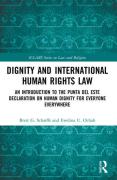
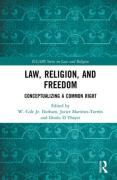
The Punta del Este Declaration, and this book dedicated to elaborating upon it, is devoted to exploring the ways that human dignity for everyone everywhere can be a useful tool in helping to address the challenges and strains facing human rights in the world today.
In 2018, an initiative was instigated to revitalize the human rights project by way of engaging the notion of human dignity. This resulted in the Punta Del Este Declaration on Human Dignity for Everyone Everywhere (Punta Del Este Declaration), a declaration co-authored by over 30 human rights experts from all over the world. The Punta Del Este Declaration simplifies and brings coherence to the concept of human dignity in 10 brief statements that capture the many dimensions and aspects of human dignity and the practical ways that human dignity is useful in the promotion of human rights. This book provides an overview of how the notion of human dignity has been used to strengthen human rights. It discusses how human dignity playsmany different roles in human rights discourse and has the force to revitalize the human rights project; it is the foundational principle upon which the human rights project is built. But it is also the telos, or end goal, of human rights. At the same time, it is an important evaluative mechanism for assessing how well a country is doing in the implementation of human rights.
The book will be a valuable resource for all those working in the areas of International Human Rights Law, Legal Philosophy, and Law and Religion.