The eBooks we sell are sold as a single-user licence and are intended for the end user only.
The sale of some eBooks are restricted to certain countries. To alert you to such restrictions, please select the country of the billing address of your credit or debit card you wish to use for payment.
For further information see https://www.wildy.com/ebook-formats
Once the order is confirmed an e-mail will be sent to you to allow you to download the eBook. For UK purchases this will be automatic. For purchases outside the UK a member of staff will need to confirm the sale. (Staff are available to do this during normal business hours, Mon-Fri 8:30-17:00 UK time)
All eBooks are supplied firm sale and cannot be returned. If you believe there is a fault with your eBook then contact us on ebooks@wildy.com and we will help in resolving the issue. This does not affect your statutory rights.
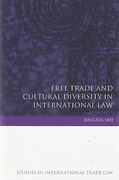
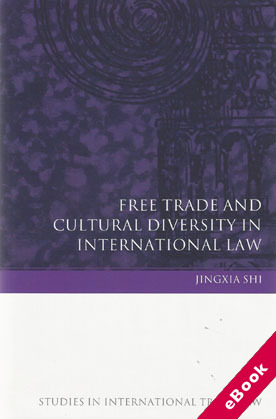
This book attempts to reconcile the concept of free trade with a key non-trade social value - cultural diversity - in an era of economic globalization. It first shows how we can look at culture in many different ways, and explains why we should care about cultural diversity. The book then examines the challenges that policymakers are faced with in formulating cultural measures in the new media environment, and analyses UNESCO's theories and approaches to cultural diversity.
This is followed by a comprehensive examination of the treatment of 'culture' in global and regional trade agreements, including the framework of the GATT/WTO system, the WTO's judicial practice involving cultural products, and the treatment of culture under the EC/EU and NAFTA. This identifies the challenges trade norms encounter in dealing with cultural products.
The author seeks to formulate a balanced view of the challenge of protecting and promoting cultural diversity while also recognizing the important goal of trade liberalization. To this end Professor Shi proposes a dual method through which the norms found in WTO agreements and in UNESCO cultural instruments may be brought into alignment: the first highlighting the compatibility of cultural policy measures with trade obligations on a domestic level, the second suggesting potential linkages between the WTO rules and the UNESCO Convention from the perspectives of treaty interpretation."