The eBooks we sell are sold as a single-user licence and are intended for the end user only.
The sale of some eBooks are restricted to certain countries. To alert you to such restrictions, please select the country of the billing address of your credit or debit card you wish to use for payment.
For further information see https://www.wildy.com/ebook-formats
Once the order is confirmed an e-mail will be sent to you to allow you to download the eBook. For UK purchases this will be automatic. For purchases outside the UK a member of staff will need to confirm the sale. (Staff are available to do this during normal business hours, Mon-Fri 8:30-17:00 UK time)
All eBooks are supplied firm sale and cannot be returned. If you believe there is a fault with your eBook then contact us on ebooks@wildy.com and we will help in resolving the issue. This does not affect your statutory rights.
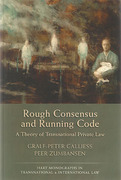
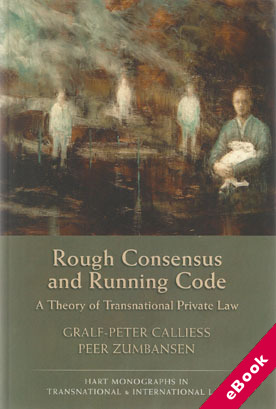
Private law has long been focus of efforts to explain wider developments in global law. As consumer transactions and corporate activities have developed with scant regard to legal and national boundaries, private law theorists have been called upon to investigate what the international law framework might look like.
Moving between 'hard' and 'soft' laws, as well as official, unofficial, direct and indirect regulation, this book constitutes the first comprehensive attempt to develop the framework for a private law regulatory regime which mediates between state-society and public-private relations on the one hand and a fast-evolving transnational normative field on the other.
Rough Consensus and Running Code describes and assesses the different law-making regimes currently observable in the transnational arena. Its core aim is to reassess, in terms of its legitimacy, the transnational regulation of contracts and corporate law as undertaken by regulatory regimes which are neither purely national nor international, neither exclusively public, nor private in nature. Instead the institutions and the principal actors are hybrids.The challenge for scholars of public and private international law is to incorporate the new norms into existing bodies of law and this, ultimately, is the challenge met by this new work.