The eBooks we sell are sold as a single-user licence and are intended for the end user only.
The sale of some eBooks are restricted to certain countries. To alert you to such restrictions, please select the country of the billing address of your credit or debit card you wish to use for payment.
For further information see https://www.wildy.com/ebook-formats
Once the order is confirmed an e-mail will be sent to you to allow you to download the eBook. For UK purchases this will be automatic. For purchases outside the UK a member of staff will need to confirm the sale. (Staff are available to do this during normal business hours, Mon-Fri 8:30-17:00 UK time)
All eBooks are supplied firm sale and cannot be returned. If you believe there is a fault with your eBook then contact us on ebooks@wildy.com and we will help in resolving the issue. This does not affect your statutory rights.
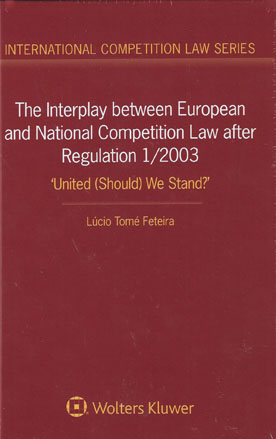
If we can speak of the European Community’s ‘economic constitution’, we can assert that competition rules, together with free movement rules, form its core.
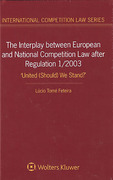
Notably, implementation of the competition rules enshrined in Articles 81 and 82 EC changed radically with the enactment of Regulation 1/2003, which in effect dispensed with mandatory prior notifications and allowed national authorities to apply Article 101(3) TFEU directly.
Given that national legislations perceive certain types of unilateral conduct, even if adopted by a non-dominant undertaking, as a potential source of anticompetitive effects, an important question concerns the leeway enjoyed by national authorities under the exception to the convergence rule in Article 3(2) of Regulation 1/2003, and the consequent effect on both legal practice and policy issues.
In this lucidly argued book, focusing on national competition provisions in Germany, France, Italy, and the United Kingdom that deal with such conduct, the author provides a detailed examination of how such considerations as the following are affected by Regulation 1/2003:-
In its clarification of the meaning of Regulation 1/2003, this book allows practitioners to fully grasp its scope. The author’s thorough, masterful analysis of the statutory framework of Article 3 of the regulation also reveals the variety of reasons why different Member States have different competition policies on the scope of the exception to the rule of convergence, and in this way provides lawyers, policymakers, and academics with welcome insights on how major EU jurisdictions apply European competition law.