The eBooks we sell are sold as a single-user licence and are intended for the end user only.
The sale of some eBooks are restricted to certain countries. To alert you to such restrictions, please select the country of the billing address of your credit or debit card you wish to use for payment.
For further information see https://www.wildy.com/ebook-formats
Once the order is confirmed an e-mail will be sent to you to allow you to download the eBook. For UK purchases this will be automatic. For purchases outside the UK a member of staff will need to confirm the sale. (Staff are available to do this during normal business hours, Mon-Fri 8:30-17:00 UK time)
All eBooks are supplied firm sale and cannot be returned. If you believe there is a fault with your eBook then contact us on ebooks@wildy.com and we will help in resolving the issue. This does not affect your statutory rights.
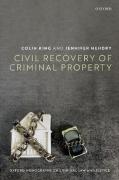
'Follow-the-money' approaches are increasingly being adopted to tackle organised crime, corruption, and terrorist activities. The rationale behind such an approach is oft stated: to show that crime does not pay, to reinforce confidence in a fair and effective criminal justice system, and to deter criminal activity.
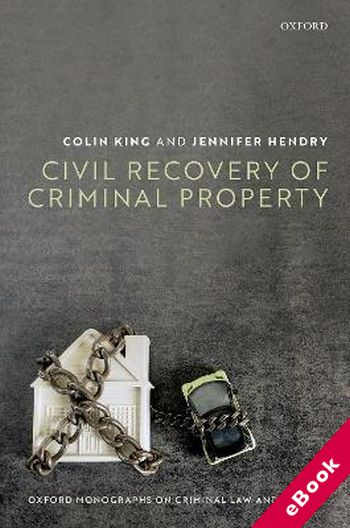
Civil Recovery of Criminal Property is an in-depth analysis of the confiscation of the proceeds of crime in the absence of criminal conviction in Ireland and England & Wales, more than two decades since the introduction of this civil/criminal hybrid procedure. This book considers the development of civil recovery in both jurisdictions, providing a comprehensive comparative account and critical examination of its legislative context and framework, judicial reception, and case law development. It leads the argument that civil recovery - like other civil/criminal hybrids - straddles civil and criminal procedure in a manner that takes advantage of the resultant legal ambiguity, to the detriment of due process, civil liberties, and human rights. Through interviews with practitioners professionally engaged with civil recovery proceedings, both in defence and in enforcement, King and Hendry remedy what has until now been a lack of empirical engagement with the operation of civil recovery in practice. The authors provide a wide-ranging analysis of civil recovery in terms of its procedural hybridity, its 'follow-the-money' approach, its questionable compliance with the requirements of due process, its property-specific character, and its supposed pragmatism in tackling the problem of serious and organised crime.
Blending doctrinal, socio-legal, and theoretical perspectives, Civil Recovery of Criminal Property will appeal both to academics and practitioners engaged with civil recovery.