The eBooks we sell are sold as a single-user licence and are intended for the end user only.
The sale of some eBooks are restricted to certain countries. To alert you to such restrictions, please select the country of the billing address of your credit or debit card you wish to use for payment.
For further information see https://www.wildy.com/ebook-formats
Once the order is confirmed an e-mail will be sent to you to allow you to download the eBook. For UK purchases this will be automatic. For purchases outside the UK a member of staff will need to confirm the sale. (Staff are available to do this during normal business hours, Mon-Fri 8:30-17:00 UK time)
All eBooks are supplied firm sale and cannot be returned. If you believe there is a fault with your eBook then contact us on ebooks@wildy.com and we will help in resolving the issue. This does not affect your statutory rights.
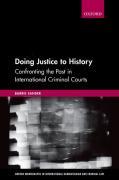
As communities struggle to make sense of mass atrocities, expectations have increasingly been placed on international criminal courts to render authoritative historical accounts of episodes of mass violence. Taking these expectations as its point of departure, this book seeks to understand international criminal courts through the prism of their historical function. The book critically examines how such courts confront the past by constructing historical narratives concerning both the culpability of the accused on trial and the broader mass atrocity contexts in which they are alleged to have participated. The book argues that international criminal courts are host to struggles for historical justice, discursive contests between different actors vying for judicial acknowledgement of their interpretations of the past. By examining these struggles within different institutional settings, the book uncovers the legitimating qualities of international criminal judgments. In particular, it illuminates what tends to be foregrounded and included within, as well as marginalised and excluded from, the narratives of international criminal courts in practice. What emerges from this account is a sense of the significance of thinking about the emancipatory limits and possibilities of international criminal courts in terms of the historical narratives that are constructed and contested within and beyond the courtroom.