The eBooks we sell are sold as a single-user licence and are intended for the end user only.
The sale of some eBooks are restricted to certain countries. To alert you to such restrictions, please select the country of the billing address of your credit or debit card you wish to use for payment.
For further information see https://www.wildy.com/ebook-formats
Once the order is confirmed an e-mail will be sent to you to allow you to download the eBook. For UK purchases this will be automatic. For purchases outside the UK a member of staff will need to confirm the sale. (Staff are available to do this during normal business hours, Mon-Fri 8:30-17:00 UK time)
All eBooks are supplied firm sale and cannot be returned. If you believe there is a fault with your eBook then contact us on ebooks@wildy.com and we will help in resolving the issue. This does not affect your statutory rights.
Due to a technical issue some ebooks are not available to order.
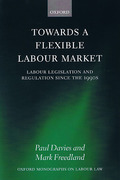
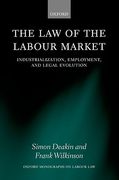
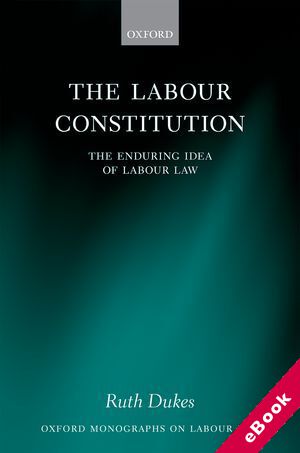
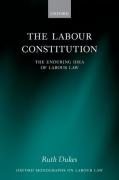
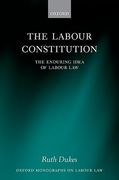
Exploring different approaches to the study of labour law, this book examines different ways of conceiving of the subject and of describing, analysing, and criticizing current legislation and policy in the field. In particular, it assesses the validity of the suggestion that 'old ways' of thinking about the subject have become outdated. Detailed consideration is given to two such old ways: the idea of the labour constitution, developed by Hugo Sinzheimer in the early years of the Weimar Republic, and the principle of collective laissez-faire, elaborated by Otto Kahn-Freund in the 1950s. It asks whether, and how, these ideas could be abstracted from the political, economic, and social contexts within which they were developed so that they might still usefully be applied to the study of labour law.
The central argument of this book is that the labour constitution can be developed so as to provide an 'enduring idea of labour law', and this is constructed against a critique of modern arguments which favour reorienting labour law to align more closely with the functioning of labour markets. As compared with the posited 'law of the labour market', the labour constitution highlights the inherently political nature of labour laws and institutions, as well as their economic functions. It provides a framework for analysing labour laws, labour markets, and labour market institutions, which does not limit the capacity of scholarship in the field to retain its critical edge. It focuses our attentions on important questions, and important fields of enquiry: on questions, not least, of the consequences for workers of the narrowing and disappearance of spaces for democratic deliberation and democratic decision-making as markets continue to expand.


Due to a technical issue some ebooks are not available to order.
Due to a technical issue some ebooks are not available to order.
Due to a technical issue some ebooks are not available to order.