The eBooks we sell are sold as a single-user licence and are intended for the end user only.
The sale of some eBooks are restricted to certain countries. To alert you to such restrictions, please select the country of the billing address of your credit or debit card you wish to use for payment.
For further information see https://www.wildy.com/ebook-formats
Once the order is confirmed an e-mail will be sent to you to allow you to download the eBook. For UK purchases this will be automatic. For purchases outside the UK a member of staff will need to confirm the sale. (Staff are available to do this during normal business hours, Mon-Fri 8:30-17:00 UK time)
All eBooks are supplied firm sale and cannot be returned. If you believe there is a fault with your eBook then contact us on ebooks@wildy.com and we will help in resolving the issue. This does not affect your statutory rights.
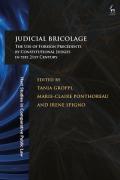
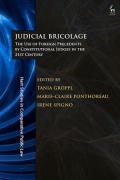
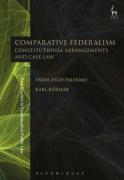
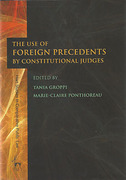
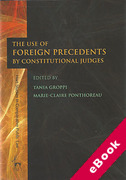
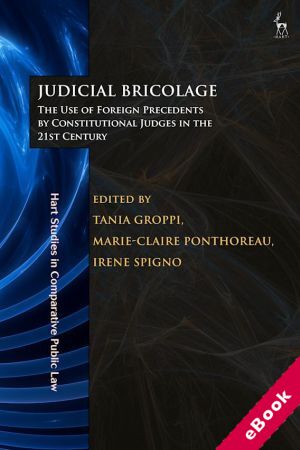
The book represents a unique contribution to comparative legal studies by presenting the results of empirical research on the use of foreign precedents in constitutional interpretation in 31 jurisdictions worldwide. It expands and updates the previous successful book The Use of Foreign Precedents by Constitutional Judges, edited by Tania Groppi and Marie-Claire Ponthoreau and published in 2013 as Volume 1 of the series Hart Studies in Comparative Public Law.
This new research, covering countries from all the continents, with a special attention to some of the emerging jurisdictions of the Global South, confirms that the practice of making explicit use of foreign precedents is still limited both quantitatively and qualitatively. Judicial dialogue only exists in common law jurisdictions and, even there, "judicial bricolage" is much more common than "judicial comparativism." Since the previous edition, this practice has gone hand in hand with new developments in constitutional law, such as: the democratic erosion and backsliding; the emergence of populist movements; the increasing role of regional human rights courts, which in many cases overshadowed foreign sources; the end of a global vision of constitutionalism.
The book, presenting a quantitative and a qualitative analysis, with the support of tables and data, gives a fuller picture of the state of the art of the practice of citing foreign precedents in this new, challenging, era, resulting in essential reading for comparative and constitutional legal scholars.