The eBooks we sell are sold as a single-user licence and are intended for the end user only.
The sale of some eBooks are restricted to certain countries. To alert you to such restrictions, please select the country of the billing address of your credit or debit card you wish to use for payment.
For further information see https://www.wildy.com/ebook-formats
Once the order is confirmed an e-mail will be sent to you to allow you to download the eBook. For UK purchases this will be automatic. For purchases outside the UK a member of staff will need to confirm the sale. (Staff are available to do this during normal business hours, Mon-Fri 8:30-17:00 UK time)
All eBooks are supplied firm sale and cannot be returned. If you believe there is a fault with your eBook then contact us on ebooks@wildy.com and we will help in resolving the issue. This does not affect your statutory rights.
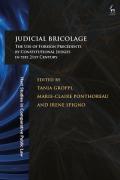
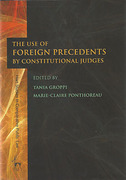
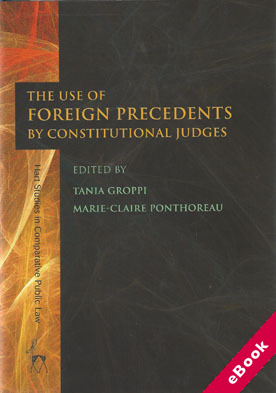
In 2007 the International Association of Constitutional Law established an Interest Group on the Use of Foreign Precedents by Constitutional Judges to conduct a survey of the use of foreign precedents by Supreme and Constitutional Courts in deciding constitutional cases. Its purpose was to determine - through empirical analysis employing both quantitative and qualitative indicators - to what extent foreign case law is cited.
The study is thereby aimed at testing the reliability of studies describing and reporting instances of 'trans-judicial dialogue' between Courts. The research also provides useful insights into the extent to which a progressive constitutional convergence may be taking place between Common law and Civil law traditions.
The present work includes studies by scholars from African, American, Asian, European, Latin American and Oceania countries, representing jurisdictions belonging to both Common law and Civil law traditions, and countries employing both centralised and decentralised systems of judicial review.
The results, published here for the first time, give us the best evidence yet of the existence, and extent, of a transnational constitutional dialogue between courts.