The eBooks we sell are sold as a single-user licence and are intended for the end user only.
The sale of some eBooks are restricted to certain countries. To alert you to such restrictions, please select the country of the billing address of your credit or debit card you wish to use for payment.
For further information see https://www.wildy.com/ebook-formats
Once the order is confirmed an e-mail will be sent to you to allow you to download the eBook. For UK purchases this will be automatic. For purchases outside the UK a member of staff will need to confirm the sale. (Staff are available to do this during normal business hours, Mon-Fri 8:30-17:00 UK time)
All eBooks are supplied firm sale and cannot be returned. If you believe there is a fault with your eBook then contact us on ebooks@wildy.com and we will help in resolving the issue. This does not affect your statutory rights.
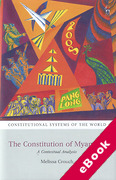
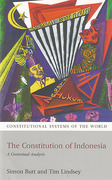
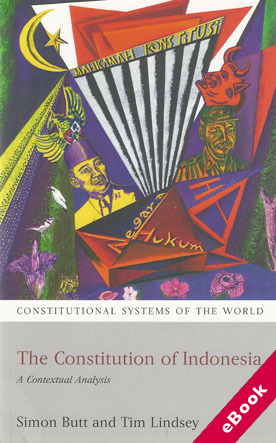
For decades, Indonesia's 1945 Constitution, the second-shortest in the modern world, was used as an apologia by successive authoritarian regimes. A bare-bones text originally intended as a temporary measure, it did little beyond establish basic state organs, including a powerful presidency. It did not offer citizens real guarantees or protections.
These weaknesses were ruthlessly exploited by the military-backed regime that President Soeharto headed from 1966 until his fall in 1998. The (first ever) amendment of the Constitution that began the following year and was completed in 2002 changed all this. Enlarging and rethinking the Constitution, it ushered in a liberal democratic system based around human rights, an open society and separation of powers.
These reforms also created a Constitutional Court that has provided Indonesia's first judicial forum for serious debate on the interpretation and application of the Constitution, as well as its first significant and easily-accessible body of detailed and reasoned judgments.
Today, Indonesian constitutional law is rich, sophisticated and complex. This book surveys this remarkable constitutional transition, assessing the implementation of Indonesia's new constitutional model and identifying its weaknesses. After covering key institutions exercising executive, legislative and judicial powers, the book focuses on key current constitutional debates, ranging from human rights to decentralisation, religious freedom and control of the economy.