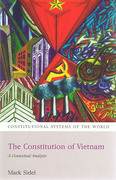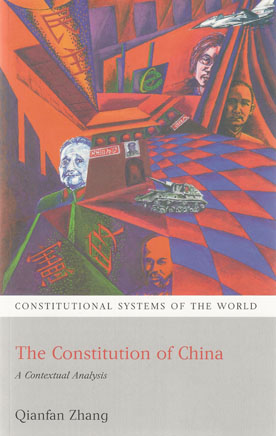
This book offers a critical perspective for the evaluation of the nature and role of the constitution and of constitutional reform in China.
China now represents a highly unusual combination of socio-historical circumstances in which a socialist legal system, headed by a communist party, is with apparent success abandoning many key features of the socialist tradition in the pursuit of a market economy and private rights in property.
A particularly interesting feature of the Chinese case is that the constitutional basis for China's apparently highly-successful programme of economic reform is one developed for the Soviet Union some seventy years ago. It is thus an early case of a socialist legal transplant, and one that has outlived its progenitor by many decades. Even amongst socialist systems the Chinese case is especially interesting.
China has remained fairly true to the original template: not only did the People's Republic of China ('PRC') in its 1982 Constitution retain the Stalinist model (albeit with an essentially Presidential constitutional form), it did so with a strong emphasis on ideology and a continuing commitment to communist party leadership.