The eBooks we sell are sold as a single-user licence and are intended for the end user only.
The sale of some eBooks are restricted to certain countries. To alert you to such restrictions, please select the country of the billing address of your credit or debit card you wish to use for payment.
For further information see https://www.wildy.com/ebook-formats
Once the order is confirmed an e-mail will be sent to you to allow you to download the eBook. For UK purchases this will be automatic. For purchases outside the UK a member of staff will need to confirm the sale. (Staff are available to do this during normal business hours, Mon-Fri 8:30-17:00 UK time)
All eBooks are supplied firm sale and cannot be returned. If you believe there is a fault with your eBook then contact us on ebooks@wildy.com and we will help in resolving the issue. This does not affect your statutory rights.
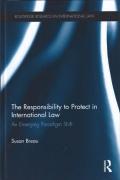
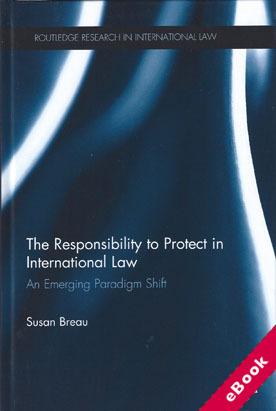
This book will consider a rapidly emerging guiding general principle in international relations and, arguably, in international law: the Responsibility to Protect.
This principle is a solution proposed to a key preoccupation in both international relations and international law scholarship: how the international community is to respond to mass atrocities within sovereign States. There are three facets to this responsibility; the responsibility to prevent; the responsibility to react, and the responsibility to rebuild.
This doctrine will be analysed in light of the parallel development of customary and treaty international legal obligations imposing responsibilities on sovereign states to the international community in key international law fields such as international human rights law, international criminal law and international environmental law.
These new developments demand academic study and this book fills this lacuna by rigorously considering all of these developments as part of a trend towards assumption of international responsibility. This must include the responsibility on the part of all states to respond to threats of genocide, crimes against humanity, ethnic cleansings and large-scale war crimes.
The discussion surrounding aggravated state responsibility is also explored, with the author concluding that this emerging norm within international law is closely related to the responsibility to protect in its imposition of an international responsibility to act in response to an international wrong.
This book will be of great interest to scholars on international law, the law of armed conflict, security studies and IR in general.