The eBooks we sell are sold as a single-user licence and are intended for the end user only.
The sale of some eBooks are restricted to certain countries. To alert you to such restrictions, please select the country of the billing address of your credit or debit card you wish to use for payment.
For further information see https://www.wildy.com/ebook-formats
Once the order is confirmed an e-mail will be sent to you to allow you to download the eBook. For UK purchases this will be automatic. For purchases outside the UK a member of staff will need to confirm the sale. (Staff are available to do this during normal business hours, Mon-Fri 8:30-17:00 UK time)
All eBooks are supplied firm sale and cannot be returned. If you believe there is a fault with your eBook then contact us on ebooks@wildy.com and we will help in resolving the issue. This does not affect your statutory rights.
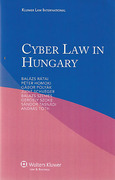
Derived from the renowned multi-volume International Encyclopaedia of Laws, this practical guide to information technology law – the law affecting information and communication technology (ICT) – in India covers every aspect of the subject, including the regulation of digital markets, intellectual property rights in the digital context, relevant competition rules, drafting and negotiating ICT-related contracts, electronic transactions, and cybercrime. Lawyers who handle transnational matters will appreciate the detailed explanation of specific characteristics of practice and procedure.
Following a general introduction, the monograph assembles its information and guidance in six main areas of practice: (1) the regulatory framework of digital markets, including legal aspects of standardization, international private law applied to the online context, telecommunications law, regulation of audio-visual services and online commercial platforms; (2) online public services including e-government, e-health and online voting; (3) contract law with regard to software, hardware, networks and related services, with special attention to case law in this area, rules with regard to electronic evidence, regulation of electronic signatures, online financial services and electronic commerce; (4) software protection, legal protection of databases or chips, and other intellectual property matters; (5) the legal framework regarding cybersecurity and (6) the application of criminal procedure and substantive criminal law in the area of cybercrime.
Its succinct yet scholarly nature, as well as the practical quality of the information it provides, make this monograph a valuable time-saving tool for business and legal professionals alike. Lawyers representing parties with interests in India will welcome this very useful guide, and academics and researchers will appreciate its value in the study of comparative law in this relatively new and challenging field.