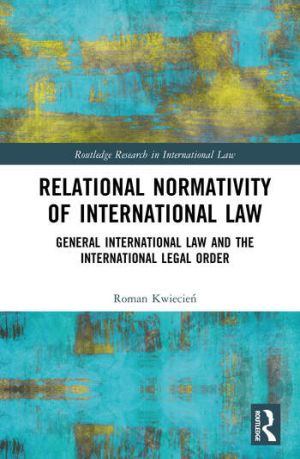
This book provides a comprehensive assessment of general international law and its normative relevance to the international legal order.
The relevance of general international law to the international legal order is founded on a concept of the relational normativity of international law. The book demonstrates how relational normativity is an intrinsic feature of international law that characterises it as a legal order. It argues that this is of crucial importance for the sources of international law as well as for normative conflicts between its rules and principles. Making a strong case for positing general international law as the core of international law, the book argues this is a basis of normative unity, an effective remedy for fragmentation, and a useful guide to areas of normative conflicts of special legal regimes. Thus, it offers an analytical lens for understanding how unity and coherence can be maintained within an increasingly complex and specialised international legal landscape.
The book will be of interest to researchers and practitioners in the field of international law and legal theory.