The eBooks we sell are sold as a single-user licence and are intended for the end user only.
The sale of some eBooks are restricted to certain countries. To alert you to such restrictions, please select the country of the billing address of your credit or debit card you wish to use for payment.
For further information see https://www.wildy.com/ebook-formats
Once the order is confirmed an e-mail will be sent to you to allow you to download the eBook. For UK purchases this will be automatic. For purchases outside the UK a member of staff will need to confirm the sale. (Staff are available to do this during normal business hours, Mon-Fri 8:30-17:00 UK time)
All eBooks are supplied firm sale and cannot be returned. If you believe there is a fault with your eBook then contact us on ebooks@wildy.com and we will help in resolving the issue. This does not affect your statutory rights.
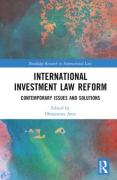
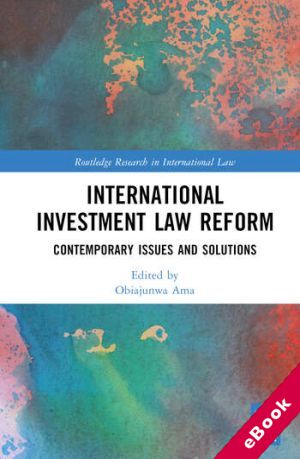
his book offers contemporary assessment of the challenges facing international investment law and proposes innovative solutions for reform.
,p> The most controversial issue in international investment law is on the settlement of investor-state disputes and its implications on national regulatory autonomy. This book recognises that current literature in international investment law fails to adequately incorporate diverse perspectives. Therefore, it interrogates the United Nations Sustainable Development Goals and their relationship with international investment policies of developing countries, particular in Africa where there has been a marked increase in investor-state disputes. Despite existing reform proposals by the UNCITRAL Working Group III, and emerging progressive treaty drafting practices around the world, there remains a need for further clarity on how the world should proceed in reforming and restructuring international investment law and policy. This book contributes to existing body of research knowledge by presenting new evidence and proposing practical solutions to enhancing the regulation of international investments and promotion of sustainable development.It will inform a range of stakeholders including investors, Civil Society Organisations, States, students, and international organisations such as the World Bank.