The eBooks we sell are sold as a single-user licence and are intended for the end user only.
The sale of some eBooks are restricted to certain countries. To alert you to such restrictions, please select the country of the billing address of your credit or debit card you wish to use for payment.
For further information see https://www.wildy.com/ebook-formats
Once the order is confirmed an e-mail will be sent to you to allow you to download the eBook. For UK purchases this will be automatic. For purchases outside the UK a member of staff will need to confirm the sale. (Staff are available to do this during normal business hours, Mon-Fri 8:30-17:00 UK time)
All eBooks are supplied firm sale and cannot be returned. If you believe there is a fault with your eBook then contact us on ebooks@wildy.com and we will help in resolving the issue. This does not affect your statutory rights.
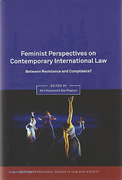
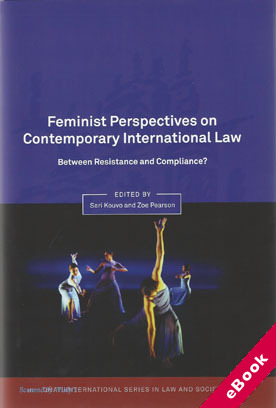
The essays in this volume analyse feminism's positioning vis-à-vis international law and the current paradigms of international law. The authors argue that, willingly or unwillingly, feminist perspectives on international law have come to be situated between 'resistance' and 'compliance'. That is, feminist scholarship aims at deconstructing international law to show why and how 'women' have been marginalised; at the same time feminists have been largely unwilling to challenge the core of international law and its institutions, remaining hopeful of international law's potential for women. The analysis is clustered around three themes: the first part, theory and method, looks at how feminist perspectives on international law have developed and seeks to introduce new theoretical and methodological tools (especially through a focus on psychoanalysis and geography). The second part, national and international security, focuses on how feminists have situated themselves in relation to the current discourses of 'crisis', the post-9/11 NGO 'industry' and the changing discourses of violence against women. The third part, global and local justice, addresses some of the emerging trends in international law, focusing especially on transitional justice, state-building, trafficking and economic globalisation.