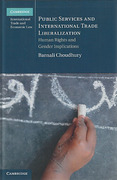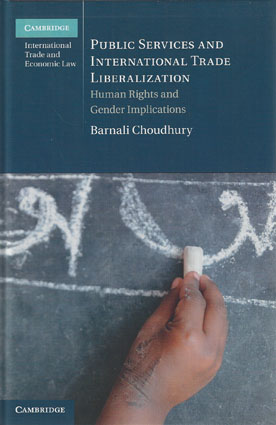
Does public service liberalization pose a threat to gender and human rights? Traditionally considered essential services provided by a state to its citizens, public services are often viewed as public goods which embody social values.
Subjecting them to market ideology thus raises concerns that the intrinsic social nature of these services will be negated. Moreover, as those most likely to be reliant on public services, public service liberalization may also further marginalize women. Nevertheless, states continue to increasingly liberalize public services.
Barnali Choudhury explores the implications of public service liberalization. Using primarily a legal approach, but drawing from case studies, empirical research and gender theories, she examines whether liberalization under the General Agreement on Trade in Services and other liberalization vehicles such as preferential trade and investment agreements compromise human rights and gender objectives.


Due to a technical issue some ebooks are not available to order.


Due to a technical issue some ebooks are not available to order.


Due to a technical issue some ebooks are not available to order.




Due to a technical issue some ebooks are not available to order.

Due to a technical issue some ebooks are not available to order.



Due to a technical issue some ebooks are not available to order.


Due to a technical issue some ebooks are not available to order.




Due to a technical issue some ebooks are not available to order.
Due to a technical issue some ebooks are not available to order.
Due to a technical issue some ebooks are not available to order.
Due to a technical issue some ebooks are not available to order.


Due to a technical issue some ebooks are not available to order.
Due to a technical issue some ebooks are not available to order.