The eBooks we sell are sold as a single-user licence and are intended for the end user only.
The sale of some eBooks are restricted to certain countries. To alert you to such restrictions, please select the country of the billing address of your credit or debit card you wish to use for payment.
For further information see https://www.wildy.com/ebook-formats
Once the order is confirmed an e-mail will be sent to you to allow you to download the eBook. For UK purchases this will be automatic. For purchases outside the UK a member of staff will need to confirm the sale. (Staff are available to do this during normal business hours, Mon-Fri 8:30-17:00 UK time)
All eBooks are supplied firm sale and cannot be returned. If you believe there is a fault with your eBook then contact us on ebooks@wildy.com and we will help in resolving the issue. This does not affect your statutory rights.
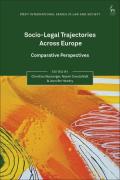
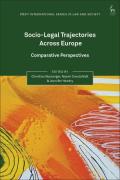
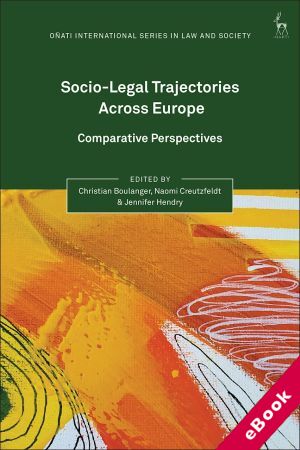
This collection explores the development of socio-legal/law and society approaches within and across Europe, focusing self-reflexively on academic and legal cultures, institutions, kinship, and scholarly agency.
What makes a socio-legal approach socio-legal? How does it differ across legal cultures, countries, or regions? How do scholarly identities develop and change in academia's places, spaces, and contexts? This collection features contributions from socio-legal scholars who engage in a critical examination of their own work. They delve into the underlying motivations behind their research questions, as well as the methods and theories they employ. This process involves reflecting on these aspects within the broader legal and academic landscape in which they operate, taking into account their personal journeys and the historical trajectories of their research fields. The chapters not only contextualise individual socio-legal research within intellectual, institutional, and political frameworks but also explore national and transnational developments, influences, networks, and conversations.
With an emphasis on exploring the link between contextual structures and scholarly agency, underpinned by self-reflection, the contributions provide a fresh and fascinating comparative perspective on contemporary socio-legal studies.