The eBooks we sell are sold as a single-user licence and are intended for the end user only.
The sale of some eBooks are restricted to certain countries. To alert you to such restrictions, please select the country of the billing address of your credit or debit card you wish to use for payment.
For further information see https://www.wildy.com/ebook-formats
Once the order is confirmed an e-mail will be sent to you to allow you to download the eBook. For UK purchases this will be automatic. For purchases outside the UK a member of staff will need to confirm the sale. (Staff are available to do this during normal business hours, Mon-Fri 8:30-17:00 UK time)
All eBooks are supplied firm sale and cannot be returned. If you believe there is a fault with your eBook then contact us on ebooks@wildy.com and we will help in resolving the issue. This does not affect your statutory rights.
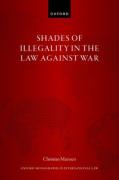
The prohibition of force is a cornerstone of the international legal order. Yet, frequent violations raise pressing questions about the resilience of the law. This monograph investigates the complex realities behind these breaches in international law, to facilitate a deeper understanding of how disputes over norms governing the prohibition of the use of force shape-and sometimes strain-the legal order.
Introducing the concept of “shades of illegality,” this book develops a typology of illegality that distinguishes between the different forms of illegality and their specific effects on international legal norms and the international legal order in general. These six types of illegality include contested applications of agreed law, emergency-driven violations, and deliberate challenges aimed at reshaping legal norms. By unpacking these categories, the book reveals how different types of illegality exert varied effects on the stability and evolution of international legal frameworks.
Shades of Illegality in the Law Against War argues that conflicts over the application and interpretation, formulation, and further development of the law are not pathological, and that illegality can even play a constructive role in the overall functioning of the international order. However, it also warns of the corrosive impact of systemic opposition-where states seek to dismantle core legal principles such as jus contra bellum. Providing nuanced analysis from both a doctrinal and theoretical perspective, this book equips readers with the conceptual tools needed to clarify the role of illegality in the international order and to critically assess the state of the prohibition of force in international law.