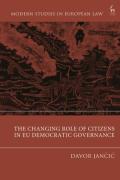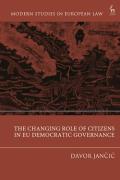
This book offers the first complete legal doctrinal map of the principle of participatory democracy enshrined in the EU Treaties.
It traces the principle's origins, its theoretical underpinnings and identifies key legal rights and obligations which follow from it. Against the backdrop of representative democracy in crises, the book unpacks the Treaty promise of citizens participating in the democratic life of the Union including its law and rule-making. Case studies, related to participation in EU law-making, are assessed to determine whether institutional practice adhere to or conflict with the identified legal obligations.
The book explores relevant judicial review and redress mechanisms which exist to give effect to the principle of participatory democracy as well as recent relevant jurisprudence of the CJEU. Drawing on political theory and empirical methods, while centring the analysis on legal interpretation and methods, suggestions are offered to advance the realisation of the principle of participatory democracy. By consolidating and conceptualising the previously contested content of the Treaty's principle of participatory democracy and coupling this doctrinal clarity with an empirically informed blueprint for applying and enforcing the principle, the volume recasts participatory democracy as a concrete, justiciable norm of EU law.