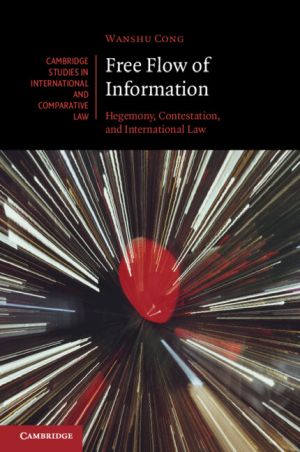
The book offers a critical history of how international law governs information to entrench unequal distribution of wealth and power since the end of World War II. Mapping doctrinal and institutional developments of various subfields in international law that concern the organization of cross-border information flow, this book identifies a dual-sided framework consisting human rights and free trade as a hegemonic framework for the governance of information. Drawing on Marxist legal theory, Third World Approaches to International Law, critical media studies, and heterodox political economy, the book argues that this framework, despite persistent internal contradictions and external contestations, has evolved to facilitate the expansion of capital and reproduce hierarchy throughout three eras of capitalist transformations of the past eight decades.