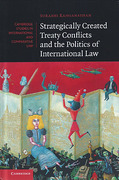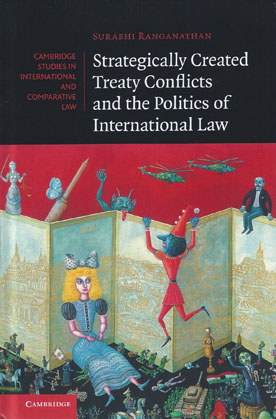
Treaty conflicts are not merely the contingent or inadvertent by-products of the increasing juridification of international relations. In several instances, States have deliberately created treaty conflicts in order to catalyse changes in multilateral regimes.
Surabhi Ranganathan uses such conflicts as context to explore the role of international law, in legal thought and practice. Her examinations of the International Law Commission's work on treaties and of various scholars' proposals on institutional action, offer a fresh view of 'mainstream' legal thought.
They locate in a variety of writings a common faith in international legal discourse, built on liberal and constructivist assumptions. Ranganathan's three rich studies of treaty conflict, relating to the areas of seabed mining, the International Criminal Court, and nuclear governance, furnish a textured account of the specific forms and practices that constitute such a legal discourse and permit a grounded understanding of the interactions that shape international law.