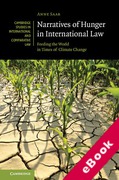
This book explores the role that the language of international law plays in constructing understandings - or narratives - of hunger in the context of climate change. The story is told through a specific case study of genetically engineered seeds purportedly made to be 'climate-ready'.
Two narratives of hunger run through the storyline: the prevailing neoliberal narrative that focuses on increasing food production and relying on technological innovations and private sector engagement, and the oppositional and aspirational food sovereignty narrative that focuses on improving access to and distribution of food and rejects technological innovations and private sector engagement as the best solutions.
This book argues that the way in which voices in the neoliberal narrative use international law reinforces fundamental assumptions about hunger and climate change, and the way in which voices in the food sovereignty narrative use international law fails to question and challenge these assumptions.